
What are the Requirements of a Valid Will in Texas?
Texas has specific legal requirements for what makes a Will valid. A Will that does not meet all the requirements will not be enforceable.
In this post we’ll answer some common questions I get asked:
- What makes a Will valid in Texas?
- Does a Will have to be notarized?
- What is a self-proving affidavit?
- Can I write a Will without a lawyer?
What Makes a Will Valid in Texas?
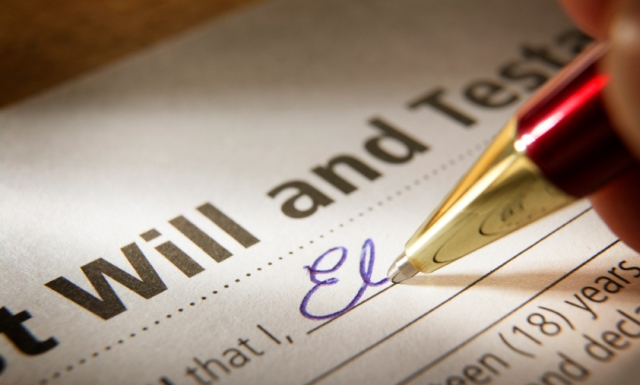
To be valid in Texas, a Will must meet the following requirements:
1. The person making the Will (the “testator”) must have legal capacity, which means that they be at least 18 years old, lawfully, or a member of the armed forces of the United States.
2. The testator must be of “sound mind.”
Texas courts have ruled that you have testamentary capacity to make a valid Will in Texas if you have the mental ability to understand:
- the fact that you are making a Will;
- the effect of making a Will;
- the nature and extent of your property;
- the persons who are the natural objects of your bounty (e.g. your relatives);
- the fact that you are disposing your assets;
- how all these elements relate so as to form an orderly plan for the disposition of your property.
3. The testator must intend to create a writing that outlines how his property he wants his property distributed after he dies.
You have testamentary intent if at the time you sign your Will, you intend to make a writing that details who will receive your property after you die.
4. The Will must be in writing.
The formalities required for a written will depend on what type of Will you have made. Texas recognizes two types of Wills:
- A holographic Will is a handwritten Will. To be valid, you must write the Will completely in your own handwriting and sign it. There is no requirement that witnesses or a notary sign the document.
- An attested Will is a Will that is not completely in the handwriting of the testator. This is commonly a typewritten Will, like one an attorney would prepare for you. To be valid, you must
- sign the Will, or direct another person to sign it in your presence, and
- at least two credible witnesses over the age of 14 must sign it in your presence.
Does a Will Have to be Notarized to be Valid in Texas?
No. A Will that meets the requirements listed above is valid in the state of Texas, even if it is not notarized.
However, most Wills attorneys prepare include self-proving affidavits to the Will. A self-proving affidavit is a sworn statement that witnesses and the person making a Will (the testator) sign in front of a notary public. It is presumptive evidence that the testator signed the Will in accordance with state law.
What is a Self-Proving Affidavit?
Including a self-proving affidavit is not a requirement of a valid Will in Texas. However, having one makes streamlines the probate process.
Without a self-proving affidavit, it would be necessary to bring in witnesses to court to Texas statutes give testimony that the signature on the Will is genuine and they witnessed the testator sign the document. This can be problematic if witnesses have died or cannot be located.
The benefit of a self-proving affidavit is that it substitutes for in-court testimony of witnesses during probate. This saves considerable time and expense.
What Happens if Will Does Not Valid?
A Will allows you to identify your beneficiaries, and nominate a legal guardian for minor children. It also allows you to nominate an executor, who will manage your estate, pay your debts, expenses and taxes, and distribute your property as you specify. If you are creating trusts for beneficiaries after you die, you can appoint a Trustee and outline the terms of the trusts.
If a Will does not meet all the requirements of a valid Will in Texas, a court will not admit it to probate. As a result, a statutory formula, known as the intestacy statutes, will control who receives your property. Dying without a Will in Texas may result in your property passing in a manner you would not have preferred.
Do I Need a Lawyer to Make a Will in Texas?
Many people choose to write their Wills without the advice of an attorney using DIY software. While there is no legal requirement that you use a lawyer to make your Will, DIY estate planning is fraught with risk.
An attorney can help you navigate these legal requirements to ensure your Will carries out your wishes after you die.
This post was originally published on January 13, 2010 and updated on July 29, 2023.
About Rania

Comments
Bruce Yamini
September 28, 2011 at 9:59pm
Does it invalidate a will if the decedent resided in Texas, but the will was executed in Oklahoma?
Thanks and blessings, Bruce Yamini
Rania Combs
September 29, 2011 at 11:42am
Generally, Texas will recognize a valid will that was executed in compliance with the laws of another state. However, especially if you intend to reside in Texas, it would be prudent to consult with a Texas attorney to ensure that your Will complies with Texas statutes and takes advantage of special laws that simplify the probate process.
Gay
January 19, 2012 at 1:56pm
My father-in-law died leaving a will. It is a very short typed will stating his intent to leave his possessions to his two living sons. He signed the will, two unrelated people signed the will as witnesses, however…the will is not dated. Is this will valid in the state of Texas?
Rania Combs
January 19, 2012 at 2:55pm
Thanks for your question.
In Texas, there is no requirement that a will is dated; however, it is standard practice is to include the date on the same page as the testator’s signature. Having the document dated can be important in a lot of circumstances, such as if the testator leave multiple wills and there is a question about which is the most recent will or if there is a question about whether the testator had testamentary capacity on the date he or she signed the will.
Ann
February 17, 2012 at 6:58pm
If I write a Will, do I have to appoint someone to be my executor? Can my wishes just be carried out by my family?
Rania Combs
February 17, 2012 at 8:03pm
You can name a family member to serve as your executor.
linda tucker
February 8, 2016 at 1:53pm
Do i have to appoint my spouse as my executor, or can I appoint my child from previous marriage?
Rania Combs
February 9, 2016 at 3:41pm
You do not have to appoint your spouse as executor.
Rohini
February 25, 2012 at 1:15am
Can I be one of the two witnesses to my spouse’s will if I am also a beneficiary of the will?
Rania Combs
February 25, 2012 at 8:18am
Please refer to my article on who can witness a Texas will by following the link.
T. Keith
April 2, 2012 at 10:35am
If a Texas will is not probated within the allotted 4 year time slot is the will invalid?
Rania Combs
April 4, 2012 at 8:21am
After the four years has elapsed, the will can be probated only as a “muniment of title” if you can show that failing to probate the will was not due to the absence of reasonable diligence. A muniment of title transfers title to property according to the terms of the will. No executor or administrator will be appointed.
Rae
May 26, 2012 at 12:36am
I have my will completed and signed by two witnesses before a notary public. Do I need to have this filed at my local courthouse or can I keep this in my possession?
Rania Combs
May 26, 2012 at 8:34am
It is possible for you to deposit your will with the clerk of the court for safekeeping; however, depositing the will is not mandatory and has no legal significance.
Michael Uribe
July 27, 2012 at 10:08pm
My father left a typed will signed by him and a notary and that is it. It states my brother as executor and the house left to me and my sister. It states that he is in right mind and all that. But just signed by him and a notary…Is this a Valid will for the house to belong to me and my sister? Also if it is not Who does the house go to?
Rania Combs
July 31, 2012 at 11:21am
To be valid, it must be in writing, signed by the testator, or another person at his direction and in his presence, and attested in his presence by at least two credible witnesses over the age of 14. Just being notarized is insufficient. If a testator dies without a valid will, his property is distributed according to the intestate distribution scheme.
Amanda beard
September 23, 2015 at 3:50am
Can the notary be one of the witnesses? Thank you ma’am.
Rania Combs
September 23, 2015 at 8:13am
The following article may answer your question: Is a Will Signed by One Witness Valid if it is Also Signed by a Notary?
Robert C
September 1, 2012 at 2:31am
Living in Texas and married. Can I construct a valid will that leaves property or money to someone other than my spouse? Example; can I leave a car to my son?
Rania Combs
January 2, 2013 at 5:07pm
It is possible to make bequests of your separate property and your share of the community property to someone who is not your spouse.
Rania Combs
October 15, 2012 at 10:18am
A valid holographic will must be written completely in the testator’s own handwriting, and signed by the testator. There is no requirement that it be signed by any witnesses or notarized for it to be valid.
Ellen
December 27, 2012 at 12:46am
My Father lived and died in Texas, and his widow (not my mother) said that he left everything to her; and she will not give me a copy of his will. Do you have any suggestions how I can get a copy of the will?
Rania Combs
May 21, 2014 at 8:20am
The following article may answer your question: Can I Force My Stepmother to Show Me My Deceased Dad’s Will.
Marilyn
January 1, 2013 at 11:33pm
My husband and I are considing making a will. Do we each need to prepare a separate will?
Marilyn
Rania Combs
January 2, 2013 at 9:07am
It is customary for each spouse to have a separate will.
Jack Lesley
January 3, 2013 at 2:51pm
Must my will be probated in the county where I am residing when I die or can it be probated in another county.
Rania Combs
January 3, 2013 at 3:09pm
According to Section 6 of the Texas Probate Code, a will should be admitted to probate in the Texas county where the decedent was domiciled or had a fixed place of residence.
If the decedent was not domiciled in Texas and had no fixed place of residence in this state, the proper venue depends on where he or she died:
Bobby Thomas
February 6, 2013 at 5:52pm
Does a notarized will need two witness also?
Rania Combs
February 8, 2013 at 9:39am
Yes.
Barbara
March 19, 2013 at 7:41pm
Do the wishes written in a Will have to be followed by the Executor? For instance, if a coin collection was bequeathed to a specific person, do they have to be given it by law once the Will is probated? Is there a time limit for when that property has to be turned over to that recipient?
Rania Combs
March 20, 2013 at 9:43am
An executor must comply with the wishes of the testator. Sometimes a testator will put restrictions on the gift. For example, the Will may specify that if a bequest is made to a minor, then the property will be held by that minor’s guardian until he or she reaches a certain age. It’s always best to read through the Will to determine the testator’s wishes and to seek guidance from an attorney as to any provisions you do not understand.
Jim
May 14, 2013 at 3:14pm
I guess I am a little confused by your site here on Wills. In order for it to be accepted in Texas, the Will has to be handwritten? Or am I misunderstanding the topic? If a will is typed up, initialed by the individual, signed and dated by such person, notarized, and signed by 2 uninterested people, is this method acceptable? Thanks.
Rania Combs
May 14, 2013 at 4:22pm
The fact that the Will has to be written does not mean that it has to be handwritten. An attested will is typically typed, signed by the testator, or another person at his direction and in his presence, and attested in his presence by at least two credible witnesses over the age of 14. A holographic will must be written completely in the testator’s own handwriting, and signed by the testator. There is no requirement that a holographic will be signed by any witnesses.
Sarah W
December 3, 2013 at 11:32am
If we have children and wish to leave their custody to a friend in the event of my husband and my death … is there anything that is required to put into our will?
Rania Combs
December 3, 2013 at 12:54pm
All parents have the opportunity to appoint a guardian for their children in a Will or an Appointment of Guardian. If you have not named a guardian, a guardian will be selected based on certain statutory guidelines, which you can read about by clicking here.
Rania Combs
March 7, 2014 at 4:09pm
Although your Will may still be valid, it should be updated as your life circumstances change. Otherwise, it will become an outdated document that doesn’t accomplish your goals and objectives
Tony
February 22, 2015 at 5:51pm
My stepfather made a will in 2001 giving all his real and personal properties to his children, saying in his will that he is “a widower and have no living spouse.” In 2006 got married to my mother. He just died in 2015. Did his marriage invalidate his prior will?
Rania Combs
February 25, 2015 at 3:36pm
The following article may answer your questions: Does Marriage Invalidate a Will Signed Before Marriage?
Jane
March 30, 2014 at 8:26pm
Our main home is in Iowa, but we own a winter home in Texas. Does Texas recognize our Iowa will to leave our Texas property to family as it does in Iowa? Do we have to have a will in Texas also?
Thanks
Rania Combs
June 24, 2014 at 4:01pm
Generally, a will signed in accordance with the laws of one state would remain valid if you move to Texas. However, creating a Texas will may allow you to take advantage of unique procedures and laws that can simplify probate and can affect the distribution of your estate. For more information see: Is the Will I Signed in Another State Valid in Texas?
Ken
April 11, 2014 at 7:50pm
I was told by an officer at the local bank that a Texas will must be executed in the presence of an attorney to be legal. True or not? I thought 2 witnesses and a notary is appropriate. Your comment please.
Rania Combs
April 12, 2014 at 12:07am
There is no statutory requirement that a Will be signed in the presence of an attorney.
Justin
April 23, 2014 at 7:42pm
My grandmothers son died and didn’t leave a will. He didn’t have kids or a wife. He had 1 house. What actions does my grandmother have to take to sell his house?
Rania Combs
April 25, 2014 at 9:13am
The following article may help answer your questions: What to do When Someone Dies in Texas.
James
May 6, 2014 at 7:58pm
Does Texas law recognize video will?
Rania Combs
May 6, 2014 at 8:04pm
No. Texas does not recognize a video will.
Dean
June 27, 2014 at 8:48pm
Does Texas law require the executor of a will to live in Texas? I would rather my final affairs be handled by a relative in another state.
Thank you.
Rania Combs
June 29, 2014 at 9:40pm
The following article may answer your question: Can a Non-Resident Serve as Executor of My Estate?
Mark
July 28, 2014 at 9:58am
My dad has terminal cancer and has requested that I transfer ownership of his houses (he has two) to myself (his oldest) and my sister. He wants me to contact the county tax office to get this done. I would think that an amended will stating his specific wishes would accomplish the same thing? Am I wring?
Rania Combs
July 29, 2014 at 1:50pm
A Will can be used to transfer ownership of real property upon death. The following article discusses an enhanced life estate deed, which allows a property owner to transfer real property at death without the necessity of probate: What is a Ladybird Deed?
Lorrilisa Estrello
December 10, 2014 at 10:57pm
Can a written will be changed later by the issuer in the form of a verbal will if it is recited in front of witnesses or does the written will reserve the final say?
Rania Combs
December 11, 2014 at 11:57am
Texas does not recognize oral wills. For more information, read: Can I Make An Oral Will In Texas?
Sarah Trahan
January 30, 2015 at 6:39pm
When a person is deceased and has left a holographic or a attested will, do you take the will to your local county clerk office to be probated?
Rania Combs
January 31, 2015 at 3:06pm
Thanks for your question. The following article discusses where a Will should filed for probate in Texas: Where Should a Will be Probated in Texas?
Robin Rio
April 5, 2015 at 5:42pm
I have a will but I would like to make an ammendment to it. Can I write out the changes I want and attach it to the will. Will that be valid?
Rania Combs
April 14, 2015 at 4:29pm
The following article may answer your question: Can I Make Handwritten Modifications to a Typewritten Will?
Cassandra
April 13, 2015 at 5:29pm
My mother has done a will had it notorized in the presence of 2 witnesses. Does she need to also file it with an attorney to be valid?
Rania Combs
April 14, 2015 at 4:15pm
The Texas Estates Code provides a procedure for those wanting to deposit a will with the clerk of the court for safekeeping. The cost of depositing a will with the clerk of the court is $5. Depositing the will is not mandatory, and has no legal significance. A will deposited with the court will not be treated any differently for purposes of probate than one that has not.
Kelly
May 15, 2015 at 7:09pm
My mother in law signed a will while in the hospital , leaving her house and car to her caregiver and caregiver filed it with courthouse. She was tricked into doing so. If she signs a new one, does that make the other null and void?
Rania Combs
June 22, 2015 at 2:22pm
Wills are revocable. For more information about revoking a Will, read: How Do I Revoke a Will in Texas?
Wayne
June 2, 2015 at 3:07pm
My mother recently passed away. She made a will but left off a signature. However she also did a self proving affidavit with two witnesses and a notary and all of them signed that. Is that enough to make the will valid?
Rania Combs
June 3, 2015 at 4:06pm
Section 251.105 of the Texas Estates Code provides that a signature on a self-proving affidavit is considered a signature to the Will if necessary to prove that the Will was signed by the testator or witnesses or both, except that, in that case, the Will may not be considered a self-proved Will.
Saima Hassan
July 27, 2015 at 11:14am
What makes the holographic will valid if there are no witnesses nor notiry?
Rania Combs
August 18, 2015 at 1:57pm
The following article may answer your question: What is a Holographic Will?
James Lee
August 13, 2015 at 10:04am
Can I assign my son (a beneficiary) as an executor of the Will? Thanks,
Rania Combs
August 18, 2015 at 12:45pm
Yes. There is no law restricting a beneficiary from serving as an executor.
Destiny
August 18, 2015 at 11:56am
Is it possible for me to sign as one of the witnesses to my husband’s Will as long as it is in front of a notary? Or will it still be voided simply because I have the most to gain?
My husband and I don’t know anyone around our area that can sign as uninterested witnesses, so me and my mother would be signing.
Rania Combs
August 18, 2015 at 12:25pm
The following article may answer your question: Can I Make A Testamentary Gift to Someone Who Witnesses My Will?
Valerie Ashton
August 18, 2015 at 5:29pm
Once you create a will, where to you file it (in Texas)? Who keeps it? How does your family know where to go to get it? Ideally, I would like to create a will and funeral preferences, file it with an entity and then give that entity’s contact information to a relative in the event of my passing. Not have the information available for family to review and debate while I’m alive. Thanks!
Rania Combs
September 18, 2015 at 5:46pm
The following article may answer your questions: Where Should I Store My Estate Planning Documents?
Dave Nadolny
August 23, 2015 at 8:42pm
Our current will was prepared in Collin County Tx, we have since moved to Van Zandt County TX. May I assume the change in residence from Collin County to Van Zandt will NOT affect it’s being valid?
Rania Combs
September 18, 2015 at 5:43pm
The fact that you move from one county to another will not affect the Will’s validity.
Ben Neal
August 29, 2015 at 2:00pm
I’m married with two kids. Can I leave a will to my kids with my half of my property?
Rania Combs
September 18, 2015 at 5:39pm
Yes.
Susan Mills
September 16, 2015 at 12:28pm
My 80 year old father has a Will and it is filed with the court in the county where he lives. He plans to remarry next month. Does that make his will null?
Thank you very much.
Rania Combs
September 16, 2015 at 1:26pm
The following article may answer your question: Does Marriage Revoke a Valid Preexisting Will?
Amanda
December 5, 2015 at 9:46pm
My dad passed away and left a will. He has a widow, does she have rights to 1/3 of the estate? He left his property and insurance to his children
Rania Combs
December 14, 2015 at 12:35pm
When someone dies leaving a Will, his probate estate will be distributed according the terms of the Will. Non probate assets, such as insurance policies, are controlled by a beneficiary designation, rather than the Will. So for example, suppose that an individual’s Will specifies that 1/3 of his estate would pass to his Wife, but the insurance policy lists only his children as the beneficiaries. In that situation, 1/3 of the probate estate would pass to the Wife, but the full proceeds of the insurance policy would pass only to his children.
Surviving spouses do have certain rights, however, which you can read about in the following article: Can I Disinherit my Spouse in Texas?
Mary P
December 7, 2015 at 9:11pm
Is it legal for me to leave my property to my live-in boyfriend of 8 years in my will? Do I have to leave any property to my adult children or can I leave everything to my boyfriend? Thank you.
Rania Combs
December 14, 2015 at 12:23pm
A Will allows you to dictate how and to whom your property will be distributed when you die. It will allow you to disinherit your adult children if you wish to do so.
Winnie Meeker
December 8, 2015 at 2:32pm
My husband and I each has a will prepared by the military legal services when stationed in CA in 2005. It includes a notarized self-proving affidavit with 2 witness signatures, an Advance Health Care Directive, and a Durable POA. All documents have the following preamble:
“The is a military testamentary instrument prepared pursuant to Title 10 United States Code, Section 1044d. Federal law exempts this document from any requirement for form, formality or recording that is prescribed for testamentary instruments under the laws of a state, the District of Columbia, or a territory, commonwealth or possession of the United States. Federal law specifies that this document shall be given the same legal effect as a testamentary instrument prepared and executed in accordance with the laws of the jurisdiction in which it is presented for probate. It shall remain valid unless and until the Testatrix revokes it.”
We are Texas residents now and plan to stay. We do not want to change any provision of our wills at this time. Are our wills as effective as Texas wills?
Rania Combs
December 31, 2015 at 7:24pm
The following article may answer your question: Is a Will I Signed in Another State Valid in Texas?
Darrell Krewson
December 29, 2015 at 6:44pm
I lived in Iowa where my wife and I made out our will. We since moved to Texas . Will it valid in Texas ??
Rania Combs
December 31, 2015 at 6:45pm
The following article may answer your question: Is a Will I Signed in Another State Valid in Texas?
Amy Clark
May 11, 2016 at 12:23pm
I am single. I have a daughter that is 21 years old. I am leaving everything to her in my self-proving affidavit. I have no debt. My house and property are paid in full. I have a checking account, savings account and IRA with daughter as beneficiary.
Does the will have to be probated? Do I have to have an executor?
Rania Combs
June 15, 2016 at 10:45pm
When ownership of the decedent’s property, such as a home, is evidenced by title, that property cannot be sold or transferred until the decedent’s name is removed from the title. Probate records become a link in the chain of title, demonstrating that the decedent’s property has passed to someone else.
Pat Burgher
May 23, 2016 at 12:39pm
Does a will need to be registered with the state or any other governmental agency?
Rania Combs
June 15, 2016 at 10:35pm
No. Wills do not need to be registered with the sate or any governmental agency to be valid.
Lucas
June 7, 2016 at 9:54am
My aunt created a will several years ago and a close friend kept the original and refuses to give it back. My aunt would like to make changes to her will, what would she need to do?
Rania Combs
June 15, 2016 at 10:22pm
Wills can be amended and revoked. Most Wills include a statement that the new Will revokes any prior Wills or codicils made by the testator.
Grisel Gallardo
July 7, 2016 at 12:51pm
My husband does not want to write a will but i do. If i write a valid will signed by two people can i leave my life insurance policies to my children.
Rania Combs
July 9, 2016 at 12:22pm
Insurance policies typically pass by beneficiary designations, so it’s important that you coordinate any beneficiary designations with your Will. For example, if a beneficiary designation lists a spouse as the beneficiary but a Will specifies that all assets should pass to children, the beneficiary designation controls.
Marta
July 7, 2016 at 9:57pm
Hi. My husband and I do not have any children, but we have a nephew who we have raised since birth. He is 7 years old. Can we leave him all are belongings but make someone else executor of your estate until he is 18?
Rania Combs
July 9, 2016 at 12:12pm
You can accomplish your wishes by establishing a testamentary trust for your nephew and appointing a trustee to manage those assets until whatever age you determine would be appropriate to give your nephew full control over assets you leave him.
Lana Rosenthal
July 13, 2016 at 3:10pm
Do I have to have a notary with a handwritten, 2 witness Will for it to be valid? Thank you!
Rania Combs
July 17, 2016 at 10:39am
The following article may answer your question: Is A Texas Will Valid If It Is Not Notarized?
Teresa
July 14, 2016 at 1:28am
Hi Rania. Several people have told me “You don’t need a will in Texas because Everything goes to your spouse if you’re married.” Then a friend told me that is wrong information. The friend told me: If you don’t have a will in Texas that all properties go to following: 50% to your living spouse and 50% to your children (NOT including step-children), but only your biological children and/or adopted children. Which one is correct? Thank you for your help 🙂
Rania Combs
July 17, 2016 at 10:36am
Dear Teresa,
The following article explains how property is divided when someone dies without a Will in Texas: What Happens if You Die without a Will in Texas?
Bev
July 16, 2016 at 4:26am
If we die and still own a home and personal property, would our Will have to be probated to pass that property to our children? If we sell our home and move to apartment and only have cash and home items, would our Will need to be probated?
Rania Combs
July 17, 2016 at 10:20am
The following article explains when probate is necessary: Is Probate Always Necessary in Texas? Texas has also authorized a way to transfer real property outside of probate by use of a Texas Transfer on Death Deed.
Sherry
August 23, 2016 at 1:47pm
I would like to include my two step children in my will as equal heirs with my children–can I do this?
Rania Combs
August 24, 2016 at 1:27pm
Yes. Your Will can list your stepchildren as equal beneficiaries to your property.
Mary
September 13, 2016 at 7:14pm
If the original will is lost and there is a copy, is it a legal document. Our attorney has the copy of my deceased mother’s will and said he cannot execute the will. Please advise.
Rania Combs
September 23, 2016 at 3:45pm
The following article may answer your question: Is it possible to probate a lost will in Texas?
bart
September 19, 2016 at 5:36pm
My dad just passed away and he remarried. His wife has not communicated to us since his passing. My father told me in the hospital bed that I was in the will. I just want to find out if there is anything to split up or did she get him to sign over everything to him.
Rania Combs
September 23, 2016 at 3:38pm
Please accept my condolences for your loss. The following article may answer your questions: Can I Force my Stepmother to Show me my Deceased Father’s Will?
Julie
September 20, 2016 at 6:56am
My dad recently passed away and I was his caregiver and guardian. He redid his will after his previous caregiver coersed him into making a will including her but leaving out two of his children. His new will has been signed by him and notarized at his bank but does not have 2 witnesses. Is it invalid?
Rania Combs
September 23, 2016 at 3:35pm
To be valid, an attested Will must be in writing, signed by testator, or another person at his direction and in his presence, and attested in his presence by at least two credible witnesses over the age of 14. Holographic Wills do not need to be witnessed to be valid.
Annette
April 6, 2018 at 5:27pm
Does the will need to be notarized by a notary ? And doesn’t every page need to be initial by everyone signing the will.
Rania Combs
April 9, 2018 at 10:10am
The following article may answer your question: Is a Texas Will Valid if it is not Notarized?
Debbie Baker
October 5, 2016 at 9:22pm
Hi. My dad passed away 3 years ago. The only Will my mom and dad had is very old and it basically left the belongings to the other when one passed and then split 50/50 between me and my brother when the other passed. If I passed, my 1/2 was to be split between my 2 kids and my brother was executor (they were under age at the time and now grown) There is just me and my brother and my mom does not have anything except a home and the contents. Should we get legal advice/help on a Will or is there a simple form she could fill out and sign with a notary? Thank you for your help
Rania Combs
November 30, 2016 at 4:32pm
I always recommend getting legal advice!
Val Donovan
March 18, 2020 at 9:35pm
This answer is not much help. I have the same exact issue minus the children, but my brother executor says he can’t find the will. How can I get a copy of it and/or make sure no attempts to change it have been made? (Texas)
Rania Combs
March 23, 2020 at 3:57pm
When an original Will cannot be found, it is presumed to have been revoked. The presumption is rebuttable.
Texas has a procedure for admitting a lost Will to probate. To admit an alleged lost Will to probate, in interested person must:(1) Prove that the Will was valid (2) Establish why the Will cannot be produced, in a manner sufficient to overcome the presumption that the Testator revoked it(3) Substantially prove the contents of the Will, through the testimony of a credible witness who read the Will, heard the Will read, or can identify a copy of the Will.
A qualified probate attorney can help you determine how best to proceed.
amy
October 8, 2016 at 6:50pm
I live in Texas. Can my mom be the beneficiary even if she is not a citizen?
Rania Combs
November 30, 2016 at 4:30pm
Yes.
Juliana Bustamante
January 30, 2017 at 11:05am
Must attested or holographic wills be recorded by the city or county clerks?
Rania Combs
January 30, 2017 at 1:01pm
The following article may answer your question: Do I need to File My Will?
Mary
February 13, 2017 at 11:50am
My mother had a stroke in December…she turned 94 this month and has improved greatly. She is alert and speaking. She has property and we have been told she needs to get a will. I have also been told I can download one from the Internet. We live in Texas, can you tell me what is the correct form to use and the process. Do we still need an attorney?
Thank you!
Rania Combs
February 17, 2017 at 1:37pm
Dear Mary,
I recommend that you contact an attorney for assistance rather than using a DIY form. You can read articles about the risks of DIY planning here: DIY Risks.
Pablo Torres
April 2, 2017 at 2:31pm
I am married for a second time, but I don’t want my second wife to inherit my house, which is my only asset. I want my kids to be the sole owners of my house.
If just make a holographic Will, would that be enough for them to inherit my house?
Rania Combs
April 5, 2017 at 2:29pm
Property owned before marriage is characterized as separate property and you can dispose of it as you wish; however, certain constitutional protections are available for surviving spouses in Texas. A surviving spouse is entitled to a life estate in the homestead and cannot be forced to sell the property as long as he or she occupies and uses it.
S Arnett
April 20, 2017 at 5:29pm
My mother has a will & states everything goes to me & she leaves nothing to two other children. Can this be done or does she need to state she leaves them $1.00
Thanks
Rania Combs
April 21, 2017 at 9:30am
There is no requirement that $1.00 be left to anyone. States have statutes that protect children who have been accidentally omitted from a Will. Please consult a lawyer to make sure the Will is drafted and executed properly so as to minimize the risk that a Will contest will be successful.
Sherrie Saadeh
May 5, 2017 at 9:58am
Hello! Just a quick question for direction. If my husband and I own our own business, would you suggest it is better to hire a lawyer to help us with our will? And what type of lawyer? Many thanks!
Rania Combs
May 9, 2017 at 2:44pm
Yes. I always recommend retaining an estate planning lawyer.
Bob Carroll
May 9, 2017 at 2:05pm
Does my lawyer who made my will have to sign the will?
Rania Combs
May 9, 2017 at 2:07pm
No.
Jennifer
May 19, 2017 at 5:33pm
Does a simple will still have to go through probate court?
Rania Combs
May 30, 2017 at 3:57pm
The following article may answer your questions: Is Probate Always Necessary?
Leroy Carranza
May 25, 2017 at 11:03am
Hello, my employer just recently passed away and left behind a holographic will that has been turned in for probate. There are many things not listed in the holographic will that he wanted other people to have. If he told several people verbally that certain things would belong to them after his death and it was told to these people in front of many witnesses and the witnesses are willing to testify in court under oath, would that be legal in the state of Texas?
Rania Combs
May 30, 2017 at 3:49pm
The following article may answer your question: Can I Make an Oral Will in Texas?
Jan
June 28, 2017 at 1:29pm
We live in Washington state and had our will drawn up here by an attorney. We are moving to Texas and wonder if our will is good in Texas?
Rania Combs
July 17, 2017 at 2:32pm
The following article may answer your question: Is The Will I Signed In Another State Valid in Texas?
Sue
July 12, 2017 at 10:03pm
My husband passed with a will that leaves everything to me, his spouse. The Texas will had a self-proving affidavit. Bank accounts were co- owned and his name has been removed. Car titles have been changed by presenting a death certificate and a copy of the will. The only asset remaining is a house that we both co-owned. Can I avoid probate?
Rania Combs
July 17, 2017 at 1:50pm
An affidavit of heirship may be a option in some cases. Talk to an attorney in your community to see if is right for you.
Mary
August 9, 2017 at 12:21am
In the state of Texas can the two people that is inherit estate be both witness on the will?
Rania Combs
August 24, 2017 at 5:25pm
The following article may answer your question: Can I Make a Testamentary Gift to Someone Who Witnesses my Will?
Robin Mead
November 14, 2017 at 3:49am
Can a Living Will be written the same way as a last will and testament? In the will can the person state who they want to be the executor of their estate?
Rania Combs
November 17, 2017 at 3:53pm
A living will is also known as a directive to physicians. It allows you to specify whether life-sustaining treatment should be administered or withheld if you are diagnosed with an irreversible or terminal condition.
A last will and testament allows you to specify who will get your property after you die and who will serve as executor.
Rosa Villarreal
December 13, 2017 at 2:47am
If I am a custodial parent, can I write in my will to have my child cared for by my sister, instead of the non custodial parent?
Rania Combs
November 24, 2019 at 2:31pm
Texas law states that biological parent is the natural guardian of a child unless a court finds the surviving parent to be unfit by clear and convincing evidence.
Kresa Castillo
January 9, 2018 at 3:15pm
A cousin of mine was a beneficiary on my uncle’s will. She was present at the signing of the will, but 2 of her relatives were the signing Witnesses on the will. Can a beneficiary be present at the signing of a will?
Rania Combs
January 11, 2018 at 1:41pm
There is no law of which I am aware that prohibits a beneficiary from being present during a Will’s execution.
Danielle Dill
February 1, 2018 at 11:19pm
My mother is physically unable to sign her will. We have a disinterested party willing to sign on her behalf. Is there a specific way the signature needs to be worded when signing on behalf is someone else? We live in Texas.
Rania Combs
November 24, 2019 at 2:21pm
The following article may answer your question: Can I Make A Will If I Am Physically Incapable of Signing a Document?
Joseph Smithson
February 6, 2018 at 4:50pm
Hi, I am not sure if you still monitor this thread but am curious about the self proving affidavit part. Specifically, if it were to occur that one of the witnesses were to be called by the other side and testify that they did not know they were witnessing a Will but thought it was bank papers or that they thought bank papers was said would the other witness’s along with the notary be enough to prevent the Will’s denial? Thank you
Rania Combs
February 7, 2018 at 4:08pm
The following article may answer your question: Is A Will By One Witness Valid If It Is Also Signed By A Notary?
Rod Manning
February 21, 2018 at 7:12pm
In the state of Texas, if a will is signed in the presence of a notary public & signed as notarized, is it still necessary that the will be signed by two witnesses?
Rania Combs
February 23, 2018 at 6:45pm
The following article will answer your question: Do Attested Wills Have To Be Witnessed If Notarized?
Paul Siemik
March 6, 2018 at 11:31am
My fiance and I are doing our wills separately. In regards to the two witnesses required, can the same two witnesses be the same for both her will and for my will?
Rania Combs
March 23, 2018 at 9:40am
Yes.
Kathy
March 27, 2020 at 10:43am
In Texas can the executor change the will after the person dies?
Rania Combs
March 27, 2020 at 4:22pm
No. The executor carries out the wishes of the testator. The executor cannot change the Will.
Ann
March 20, 2018 at 7:48pm
My partner and I have lived together for 4 years and share everything together. We live in Dallas, Texas. He typed up a will and had it notarized. Will this be enough to stand up in the courts?
Rania Combs
March 23, 2018 at 9:02am
The following article discusses the requirements of a valid will: What are the Requirements of a Valid Will in Texas?
Shiela Thompson
March 22, 2018 at 4:01pm
If a Will was signed by an individual and witnessed by two individuals but not notarized in 2010 is it a valid Will?
Rania Combs
March 23, 2018 at 8:55am
The following article may answer your question: Is a Will Valid if it is not Notarized?
Jo Rdrgz
April 3, 2018 at 4:56pm
Hi. Does a Self-Proving Affidavit have to accompany a holographic; does it too need to be handwritten?
Rania Combs
April 9, 2018 at 10:16am
The following article may answer your question: Can I Add a Self-Proving Affidavit to a Holographic Will?
Jesse Barrera
May 27, 2018 at 5:23pm
I hope you can give me some guidance. My Dad died in Oct of 2016. He did make a will with me as the heir to his home and also the executor of the will. I have not done anything with this will. It was written up in 2015. I’m lost in what to do with the will now that dads house is empty and this is really all my dad had in his estate. Should I contact a real estate lawyer? All I need to do is place the house in my name so I can get homeowners insurance on dads house. Will is signed and notarized with the Self Approving Affidavit attached. I just need guidance. Thank you so much. Jesse in San Antonio TX
Rania Combs
May 29, 2018 at 9:50am
Probate is the legal process of proving the validity of a will and serves as a link in the chain of title to show property of a deceased person has passed to its intended beneficiary.
ANGEL DUNN
June 4, 2018 at 11:38am
In Texas, do you have to have an original copy of a will in order to probate? My Grandmother passed Thanksgiving Day 2017. We are unable to locate the original will but there is a copy. She did leave some property and other items to us. We just can’t locate the original.
Rania Combs
June 17, 2018 at 4:59pm
The following article may answer your question: Is it Possible to Probate a Lost Will?
Faith Eichler
June 6, 2018 at 2:18pm
In Texas can I designate one person as my beneficiary with a reference to a letter in their possession signed by me that specifically designates money and/or property to be distributed as itemized?
Rania Combs
November 24, 2019 at 2:17pm
If you wish for multiple people to benefit from your estate, you should specifically identify those beneficiaries and describe how assets will be allocated to each rather than naming one beneficiary in hopes that that person will honor your wishes.
Shannon Cooper
June 17, 2018 at 12:33pm
Question, my dad is 91 years old and is fully mentally in tack. The only “problem” I’m having is this having a will be in writing. He has dexterity issues with his hands and so I’m asking, is it required that a will only be written as opposed to typed out and then submitted for signatures, etc.
Rania Combs
June 17, 2018 at 4:58pm
The “writing” in the attested Will is usually typed. Only holographic wills are required to be wholly in the handwriting of the testator.
To be valid, an attested Will must be signed by the testator, or another person at the testator’s direction and in his presence, and signed by at least two credible witnesses in the testator’s presence.
Stephanie Barrientes
July 23, 2018 at 10:52pm
Do I have to renew my will even if its 15 years old? Is it still valid. I’m 56 yrs old and very healthy?
Rania Combs
July 29, 2018 at 11:28am
Wills don’t expire. So long as it is a valid Will, it does not need to be “renewed” because of the passage of time.
La-Tanya Parker
August 1, 2018 at 12:37pm
My step dad wrote out a will while he was in the hospital, he left an insurance policy, and stated how he wanted it divided. Now the policy has been issued and 6 of his biological children have received the benefits and refused to split it the correct way. What can my mom do?
Rania Combs
November 24, 2019 at 2:15pm
Insurance policies pass by contract to the persons identified as beneficiaries. Regardless of what a Will states, the beneficiary designation controls.
Vanessa
September 24, 2018 at 12:55pm
Can my husband and I have one Will instead of one each? My parents too need to write a Will and were wondering the same.
Thank you.
Rania Combs
September 27, 2018 at 12:01pm
Each person should have his or her own Will.
Ivia Velazquez
October 15, 2018 at 9:52am
Question: I bought a home before I got remarried. The home title/deed and mortgage is soley in my name. Texas law says all before marriage is not community property, when divorcing. But if f I should die, will my new husband by law inherit the home or if I Will it to my daughter, who it was intended for, will she be able to keep it?
Rania Combs
October 15, 2018 at 11:05am
The following article may answer your question: Can My Husband Give His Children Our Homestead If He Owned It Before We Were Married?
Khalid Mansur
October 13, 2019 at 2:16am
My dad wrote a will in June 2012 and signed it on December 2013. It was witnessed by a local chief. No one else witnessed the will. My concerns the day he signed the Will he was very sick and was admitted and taken for surgery. In the will he only mentioned the beneficiaries from his last wife leaving other three kids from the first wife, does this will stand?
Rania Combs
October 14, 2019 at 10:19am
For a typewritten will to be valid in Texas, it must be signed by the testator or another person at his direction and in his presence, and attested in his presence by at least two credible witnesses over the age of 14.
A will written wholly in the handwriting of the testator must be signed by the testator, but no witnesses are required to sign.
Janine
November 1, 2018 at 9:52pm
My mom had a will made in 2005. She remarried in 2009. Is the will invalid now?
Rania Combs
November 24, 2019 at 2:12pm
No. In Texas, marriage does not revoke a valid preexisting Will; however, note that Texas affords certain rights to spouses. The following article explains: Can I Disinherit My Spouse In Texas?
Jack Nichols
December 10, 2018 at 2:14pm
Can my attorney be executor of my will?
Veronica Castille
December 12, 2018 at 11:04am
My uncle told my dad he put me in his will. My uncle passed before my aunt who has now also passed. Her sister took care of everything and I have had no correspondence or contact from her. How do I find out if my uncle did in fact, include me in his will?
Rania Combs
November 24, 2019 at 2:02pm
An attorney can be an executor if that is what you wish and the attorney accepts the appointment.
Ellie
December 26, 2018 at 2:57pm
What is required to update a will? My father has one but wants to make amendments. The original is stamped by a notary but she said if my dad opts to change it all beneficiaries need to be present. That doesn’t seem correct as people update and make wills every day without those people present.
Rania Combs
January 1, 2019 at 10:36pm
The following article may be of interest to you: Can I Make Handwritten Modifications To My Typewritten Will?.
Viola
March 4, 2019 at 4:40pm
I have a handwritten will that is not written in the testators handwriting, just his signature. There are two witnesses and a notary signing the handwritten will. I need to know if this can be considered a valid holographic will or will period.
Rania Combs
November 24, 2019 at 1:56pm
A will that is not wholly in the handwriting of the testator must be signed by the testator, or another person at his direction and in his presence, and attested in his presence by at least two credible witnesses over the age of 14. Ultimately, it is a probate court that will make the determination as to whether the Will is valid and can be admitted to probate.
Liz
August 7, 2019 at 11:30am
My mother made her will at an attorneys office in Dallas about 13 years ago. She was of sound mind and documents were signed according to the Texas laws. I was listed as the executor of that will. Recently, my sister, now her financial guardian and durable power of attorney, has threatened to go to a lawyer and change our mother’s will. Is that something she can do?
Rania Combs
October 14, 2019 at 11:39am
An agent under a power of attorney or even a guardian cannot sign a Will on behalf of another. I recommend you consult with an attorney in your community to advise you on the best course of action in light of your sister’s threats.
Reece
September 7, 2019 at 6:40pm
Hello. How Do You obtain an existing Will that has been filed in any county in Texas. Do children have any legal rights to a parent that has not mentioned them in a Will in Texas?
Rania Combs
October 14, 2019 at 11:28am
I the Will has been filed for probate, it can be located in the probate records of the county where probate was initiated. In Texas, parents can disinherit children.
Yo
October 13, 2019 at 10:59pm
Will a Will made in Texas will be accepted in other country? Or should another will be made in that particular country for estate at that country?
Rania Combs
October 14, 2019 at 10:15am
Thanks for your question. Because all countries’ laws are different, it is always best to consult with a lawyer in the country where you have property for advice on whether your current Will is sufficient or whether additional documentation is necessary.
Sharron Timmer
October 28, 2019 at 11:41am
My will states that if my spouse dies before me it will be like there is was no will (or words to that effect )
Does this mean the beneficiaries I have named , including step children wont be valid ?
Rania Combs
November 24, 2019 at 1:53pm
Thanks for your question. Unfortunately, without specifically seeing the language in the Will, I am unable to respond to your question.
Joy
January 28, 2020 at 1:46pm
I have three children. I haven’t heard from my oldest in years and he will not let me see my four grandsons with him. He was on drugs and stole from me (we’re talking about credit cards thousands and thousands of dollars) just to pay is drug dealer. So as far as I’m concerned he has received all of his inheritance when I was alive. Is there a problem giving something to the other two children and not him in the will. I live in Texas
Rania Combs
February 1, 2020 at 8:28pm
It is possible to disinherit a child in Texas. I recommend working with a lawyer to have a Will prepared and executed in accordance with all statutory requirements to minimize the risk that it will be successfully contested.
Cynthia
April 10, 2020 at 3:02pm
Can the Sole Heir and the Executor of a will be the same person?
Rania Combs
April 15, 2020 at 8:42am
Yes.
Eddy Crumley
April 15, 2020 at 10:39pm
We’re two men who bought a house together several years ago. We are now getting married. Since the house was not acquired during the marriage, it doesn’t seem to meet the definition of communmity property. So, what is needed to make sure each spouse has SOLE right of survivorship … just a will, or joint owner right of survivorship agreement, or both?
Rania Combs
April 17, 2020 at 3:13pm
Hi Eddy. Property purchased before marriage is separate property. You can name your spouse as the beneficiary of your property in a Will. You can also use a Texas Transfer on Death Deed to transfer your interest in your property to your spouse after you die.
John
June 29, 2020 at 8:01pm
Hello I am a resident of Jefferson county Texas. I have completed my will ( it’s Texas specific) but I am currently not in Texas. Can I get my will notarized and witnesses in the state that I am or do I have to go back to Texas and use a Texas notary in order to make the will valid?
Rania Combs
July 3, 2020 at 2:11pm
I am not aware of any statute that invalidates a Will because it is not signed in Texas.
Brandi
July 15, 2020 at 1:49pm
Can a typed up will also be written on? Also can the beneficiary be one of the witness signatures In Texas .
Rania Combs
July 17, 2020 at 3:53pm
The following articles may answer your questions:
Denise Demonbreun
January 20, 2021 at 1:54pm
I live in Texas as do my parents. The person who typed my parents wills Made spaces for three Witnesses rather than the two require in TX. We only had two witnesses the day the wills were signed and notarized. Will this invalidate their wills, or cause the Will (s) to have to be probated. Thank you.
Rania Combs
February 9, 2021 at 3:20pm
Probate is the process of validating a Will. Wills go through probate. To be valid in Texas, a Will must be signed by the testator in the presence of two witnesses. The fact that there are three blanks for witnesses should not matter.
Sandra Suarez
March 19, 2021 at 10:03am
I think I may be misunderstanding something. It says that the person who wants to prepare a will needs to be at least 18 years of age, married or previously married or be a member of military. Does that mean that a person who has never been married cannot have a will?
Thanks for your clarification.
Rania Combs
March 29, 2021 at 11:29am
Anyone over the age of 18 can prepare a Will; however, someone under the age of 18 who is married can also prepare a Will.
Nilda Martinez
March 24, 2021 at 8:30pm
My husband and I want to create a will to be prepared, we want our property to be sold and the monies divided by 4, we also want it too be include that my step kids receive nothing from the sale because they will be receiving from my husband’s life insurance. How do we go about doing this kind of will?
Rania Combs
March 29, 2021 at 11:20am
An estate planning attorney will be able to create a Will for you that accomplishes your objectives.
OMAR DUARTE
March 24, 2021 at 11:58pm
My mother had notary public draft a will for her. There’s a notarized witness on there, but I read that in Texan two witnesses are required for it to be legal. Can the notary’s signature also be used as a witness?
Rania Combs
March 29, 2021 at 11:19am
The following article may answer your question: Is a Will Signed by One Witness Valid if it is also Signed by a Notary?
Paula Mahoney
March 26, 2021 at 8:56pm
My step daughter took our original will! We have copies of the Notarized Will! My husband has died recently & she says she doesn’t know where it is! Will a copy of the Will! Can this be probated?
Rania Combs
March 29, 2021 at 11:17am
The following article may answer your question: Is it Possible to Probate a Lost Will?
David Williams
April 10, 2021 at 11:04am
I live in Texas and am preparing my Will and was wondering if there are any legal requirements for me to list my previous marriages. I am single and have been divorced 3 times. Only one of my ex-wives and I had children. Can you please help clarify the law or guidelines around this? Many thanks in advance.
Rania Combs
April 19, 2021 at 5:29pm
There is no law that legally requires a testator to outline previous marriages in a Will.
Vincent Farias
April 21, 2021 at 4:06am
Can a will be recorded on a phone, simply stating that you are of sound mind and your intentions of making a will followed by distribution of property?
Rania Combs
April 30, 2021 at 12:13pm
No.
Douglas
May 19, 2021 at 5:05am
In Texas can the attorney who drew up my will also probate it in court?
Rania Combs
June 8, 2021 at 4:57pm
Yes.
Marie Rockey
February 4, 2022 at 12:13pm
If my will was made in a different Texas county than where I reside currently, would it still be valid if the address is different?
Rania Combs
February 8, 2022 at 9:55pm
A will would not be invalid simply because it was made in a different county than you currently reside.
Alicia Herrera
December 22, 2022 at 7:15pm
Does property and belonging need to be itemized on the Will
Rania Combs
January 2, 2023 at 4:17pm
While certain specific gifts of property can be made, Wills usually include a residuary clause, which passes all property not specifically mentioned in a Will to named beneficiaries.